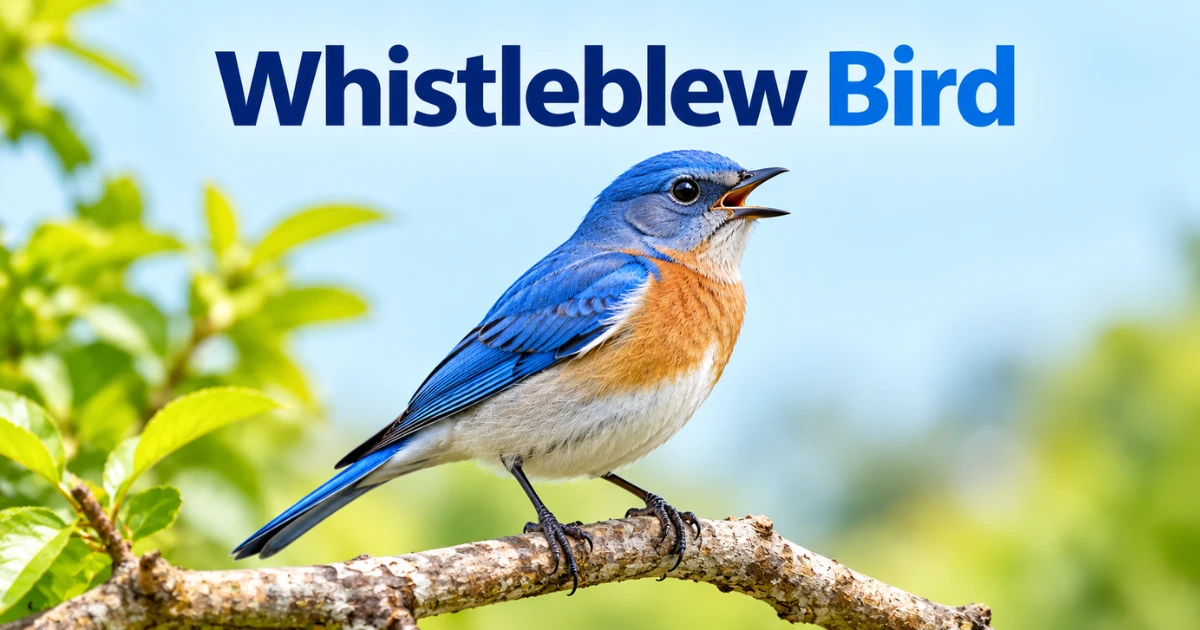
Many people search for whistleblew bird expecting to find a bird species. That is not the full story.
This guide breaks down the real meaning behind the phrase and the bird most closely tied to it.
What Does Whistleblew Bird Mean?
Whistleblew as an English Word
The word whistleblew is not random. It is the simple past tense of whistleblow, a verb tied to exposing wrongdoing.
This word family includes whistleblow, whistleblew, whistleblowing, and whistleblower. Each form follows normal English grammar rules for irregular verbs.
Dictionaries confirm this grammatical role. There is no separate entry that lists whistleblew bird as an official term.
Why “Bird” Gets Attached to Whistleblew
So why does “bird” show up next to this word online? The answer lies in sound and search behavior.
Many birds produce sharp, clear whistles. People often search using descriptive phrases instead of exact species names.
Over time, casual naming, typos, and sound-based guesses blend together. That mix creates phrases like whistleblew bird, even though no such species exists.
More Post: Glaadvoice Com: What This Website Really Is
Is Whistleblew Bird a Real Bird Species?
Whistleblew Bird vs Whistleblower Bird
Neither whistleblew bird nor whistleblower bird appears in any official bird taxonomy. Ornithologists do not use these terms.
The confusion comes from mixing a grammar term with a nature term. One belongs to language. The other belongs to biology.
Real Birds Often Mistaken for Whistleblew Bird
Several real species get pulled into this search because of their whistling calls. These include:
- Whimbrel
- Northern Cardinal
- Australian Magpie
- Whistling-ducks
- Hermit Thrush
- Various blackbird species
- Carolina Wren
- Eastern Meadowlark
Each of these birds has a distinct, recognizable whistle. None of them officially carries the name “whistleblew.”
The Whimbrel — The Closest Real Bird Connection
Whimbrel Call and Whistling Sound
The Whimbrel stands out as the strongest real-world match for this search. Its scientific name is Numenius phaeopus.
This bird belongs to the sandpiper family and travels long distances during migration. Its call is a rapid, ringing series of whistles.
That sound carries easily across open coastlines. Birders often hear a Whimbrel before they ever see one.
The Seven Whistlers Folklore Link
The Whimbrel carries an old folk name: the “seven-whistler.” This nickname comes from its unusual, repeated whistling pattern.
English folklore ties whistling night birds to omens and warnings. The Seven Whistlers legend describes mysterious, unseen birds crying out in the dark.
This cultural link helps explain why unusual bird sounds often earn imaginative names across generations.
Birds With Whistle-Like Calls
List of Common Whistling Birds
Whistling is common across many bird families, not just one species. Notable whistling birds include:
- Whimbrel
- Northern Cardinal
- Australian Magpie
- Whistling-duck
- Hermit Thrush
- Carolina Wren
- Eastern Meadowlark
- Malabar Whistling Thrush
- Black-capped Chickadee
Each species uses its whistle differently, based on habitat and behavior.
Why Do Birds Whistle?
Purpose Behind Bird Whistling
Bird whistles are not random noise. They serve clear survival functions.
Common reasons birds whistle include:
- Territory defense
- Mate attraction
- Alarm signals
- Contact calls
- Group coordination
- Parent-to-offspring communication
Birds create these sounds using the syrinx, a specialized vocal organ near the base of the trachea. Unlike humans, birds do not need lips to whistle.
How to Identify a Bird by Its Whistle
Step-by-Step Identification Tips
Sound can guide you straight to the right species. Try this simple approach:
- Listen closely to the number of notes
- Notice the pitch and rhythm
- Record the call on your phone
- Check the habitat type
- Look toward trees, poles, or open perches
- Compare the sound with a trusted bird-call database
- Confirm with visual details like size and bill shape
Sound narrows your options fast. Visual confirmation locks in the identification.
Whistleblew Bird in Folklore and Language
Seven Whistlers Tradition Explained
The Seven Whistlers legend describes ghostly bird cries linked to bad luck or coming danger. This tradition appears across older English folklore.
The Whimbrel’s whistling call made it a natural fit for this myth. Its sound felt eerie to listeners who heard it at night or across empty coastlines.
This blend of folklore and real bird behavior shows how language and nature often overlap in unexpected ways.
More Post: Webpayblog Com – What This Site Covers and Why It Matters
Common Confusion About Whistleblew Bird
Whistleblew vs Whistleblow vs Whistleblower
These three words often get mixed up, even though each has a specific job.
Whistleblow is the base verb, meaning to report wrongdoing. Whistleblew is its past tense form. Whistleblower names the person who does the reporting.
None of these words describe a bird. The bird connection only exists through sound-based comparison, not grammar.
FAQ’s
Is whistleblew bird a scientific species?
No. Whistleblew bird is not an officially recognized bird species. It functions as an informal, descriptive phrase rather than a taxonomic name.
Is whistleblew a real English word?
Yes. Whistleblew is a real English word. It serves as the simple past tense of whistleblow, a verb meaning to report wrongdoing.
What is the grammatical role of whistleblew?
Whistleblew works as the past tense form of whistleblow. It follows the same pattern as other irregular English verbs.
Can whistleblew bird describe a bird informally?
Yes. People sometimes use the phrase informally to describe birds with clear, whistle-like calls, even though it is not an official name.
Which real bird has the strongest whistle-like call?
The Whimbrel offers the closest real-world connection. Its rapid, ringing whistle and folk name “seven-whistler” make it the standout example.
Do all birds whistle?
No. Not all birds produce whistling sounds. Whistling calls appear in specific species, often tied to communication needs like mating or territory defense.
Whistleblew bird points to a language term, not a species name. The Whimbrel remains the closest real bird tied to this search, thanks to its whistling call and folklore roots.

Hi, I’m Burhan, the admin of BlessingMorning.com. I love sharing blessings and wishes that bring joy every day. My site helps with positive words for life’s special moments. I design custom cards for ceremonies like weddings, birthdays, and more. Each card is special and holds heartfelt messages. Join me here, and let’s spread good vibes together.










1 thought on “Whistleblew Bird: Meaning, Origin, and Bird Connection Explained”